How to spot a text message, iMessage or WhatsApp scam

Red flags for suspicious text messages
As part of our development work, text messages can be important for getting important and time sensitive messages to end users as we all carry a device with us and usually look at is constantly throughout the day.
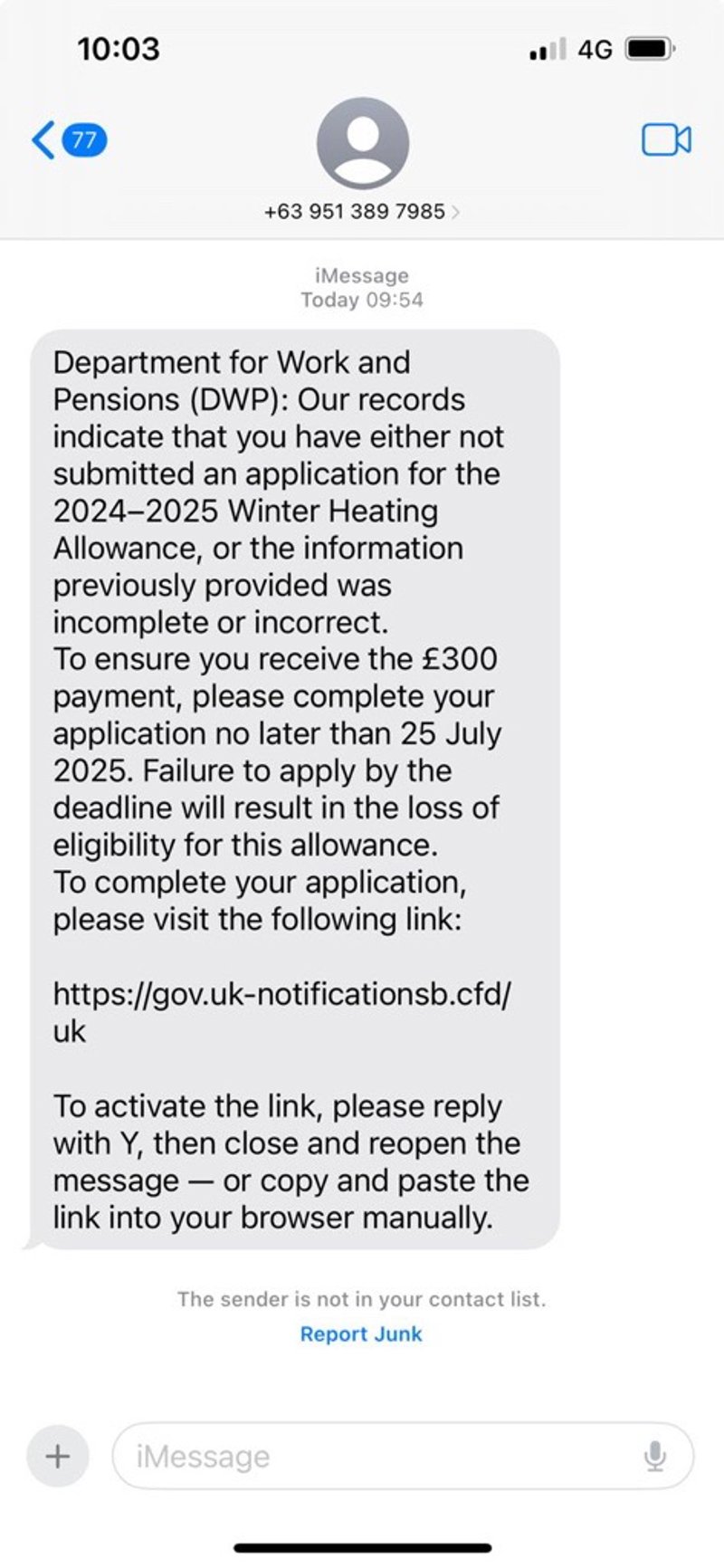
So, when a new text message pings in, especially one from an unfamiliar number, it's natural to feel a mix of curiosity and concern. But before you tap that link or reply to the message, it’s vital to pause and consider: could this be a scam? Here’s one which arrived today, 24th of July 2025.
Red flags: How to recognise a scam text message
Before you fall into the trap, look for these classic red flags in the text message you received:
1. Unfamiliar numbers and senders
Legitimate companies rarely contact customers from random numbers. If the sender is a sequence of digits you don’t recognise, or worse, an international code, it’s best to be suspicious. Scammers often use spoofed numbers to disguise their true origins. In this case, it’s a +63 number which is the Philippines not a UK number.
2. Urgency and pressure tactics
Scam texts try to create a sense of urgency. They might claim your account will be locked, or that you’ll miss out on a reward if you don’t act immediately. This is a classic tactic to get you to act impulsively, before you have time to think critically. In this case, with today being the 24th of July 2025 it is prompting for immediate action as the deadline is effectively tomorrow.
3. Requests for personal or financial information
No reputable company will ask you to confirm your password, national insurance number, or banking details via text. If the message asks for sensitive information, it’s almost certainly a scam. With this the information requested is accessed via the link rather than prompting you to log in to your account area.
4. Links and attachments
Perhaps the most dangerous element of scam text messages is the inclusion of suspicious links. Clicking these can lead to phishing websites designed to steal your credentials or even trigger downloads of malware onto your device. If it looks suspicious or unfamiliar, don’t click. In this case, the scammers have “cleverly” formatted the domain name. They’ve use the domain uk-notifications.cfd (a .cfd suffix is a new top level domain name specially designed for the clothing and fashion design industry) and they’ve made it look more official with a “gov” subdomain at the beginning and a /uk at the end.
5. Too good to be true offers
If the message promises a prize, a windfall, or something that just seems too generous, it probably is. Scammers rely on your sense of excitement to override your scepticism. In this scenario, an easy way to get £300, who wouldn’t like that?!
6. Incorrect information or wording
The content of the message is important and with the perceived urgency the finer details may get overlooked and not questioned. In this instance, the scammers are referring to the Winter Heating Allowance, but for us here in the UK it’s a Winter Fuel Payment – and if the message was genuine from the Government they’d be calling it the right thing!
Why do people fall for scam texts?
You may wonder: if these scams are so obvious, why do people keep falling victim? The truth is that scammers are constantly refining their messages to exploit our emotions and behaviours. They use social engineering, exploiting trust, fear, and even our own habits of multitasking to catch us off guard.
The illusion of authority
Scam texts often pretend to come from major companies, banks, or government agencies. The message might use official logos or language to create an air of legitimacy. If you receive a message that appears to be from your bank, don’t reply or click any links. Instead, contact your bank through its official phone number or website. With this, just contact DWP directly if it might apply.
The consequences of falling for a scam
Responding to a scam text can have serious consequences:
Identity theft: Scammers may steal your personal data and use it to impersonate you.
Financial loss: By gaining access to your bank or credit card information, scammers can drain your accounts or rack up debts in your name.
Malware infections: Clicking links can install spyware or ransomware on your device, compromising your privacy and security.
Ongoing harassment: Once you've replied to a scam message, your number may be sold to other scammers, leading to more fraudulent communications.
What should you do If you receive a suspicious text?
If you suspect a text message is a scam, follow these steps:
1. Don’t respond or click links
Simply ignore the message. Engaging in any way confirms to scammers that your number is active, encouraging further attempts.
2. Block the sender
Most smartphones allow you to block numbers easily. Doing so won’t always stop new scam attempts, but it will prevent further messages from that specific sender.
3. Report the message
Many countries have dedicated services for reporting scam texts. In the UK, you can forward suspicious messages to 7726 (spells “SPAM” on your keypad). Reporting helps authorities track and shut down scammers.
4. Contact the real company directly
If the text claims to be from a bank or service provider, call their official customer service number to verify the claim. Never use contact information provided in the text itself.
5. Stay informed and educate others
Knowledge is your best defence. Talk with family and friends, especially those who might be less tech-savvy, about how to recognise and avoid scams.
Conclusion: Stay Vigilant
Scammers are relentless and constantly evolving, but with caution and knowledge, you can outsmart them. That suspicious text message is likely a scam because it employs urgency, requests sensitive information, or dangles unrealistic rewards—classic hallmarks of fraudulent activity. By recognising the signs and refusing to engage, you protect not only yourself but also help stem the tide of cybercrime.
Remember: when in doubt, it’s always better to delete than to reply. Your vigilance is your strongest shield against scams.
Share article:

Umbraco vs WordPress: which CMS should you choose in 2026?
Umbraco is more secure by default; WordPress is faster to launch. Which fits your project?
Read more
Local SEO for estate agents: how to improve visibility and win more instructions
Discover how a stronger local SEO strategy can help estate agents improve Google visibility, attract more direct enquiries, and win more instructions.
Read more

When Legal Software Has to Be Right
What changes when the software output carries legal and financial consequence, from the team that builds it.
Read more
Impact of AI on SEO: The 2026 Guide
AI Overviews and answer engines are reshaping search. Here is what the rise of AI means for SEO in 2026, and how to keep your site visible.
Read more
Umbraco vs Contentful: which CMS should you choose in 2026?
Umbraco vs Contentful compared: traditional versus headless, cost, developer experience, and hosting control. A practical guide from 16i to help you choose.
Read more
Umbraco vs Kentico: which CMS should you choose in 2026?
Umbraco vs Kentico compared: cost, built-in marketing tools, e-commerce, and flexibility. A practical guide from 16i to help you choose the right .NET CMS.
Read more
Upgrading to Umbraco 17: a strategic investment for your business
Umbraco 13 support ends December 2026. Umbraco 16 support ended June 2026. If your site hasn't upgraded to Umbraco 17 LTS, here's what's involved and how 16i can help.
Read more