Websites for theatres, arts centres and cultural venues
Arts venues have a harder digital job than most organisations realise. The website has to sell tickets, carry a programme that changes constantly, work for audiences of every age and level of confidence online, and do all of it while the team running it is small, busy and rarely technical.
16i has been building for venues in this position for years. We are a Spektrix partner, and our clients include the Everyman Theatre in Cheltenham and The Sub Rooms in Stroud. We are based in Cheltenham and work with venues across the UK.
What we build for arts and cultural venues
Most venue projects we take on fall into one of four areas, and many combine several.
Venue websites built around the programme. The core of an arts website is the what is on listing, and it needs to be genuinely easy for the marketing team to maintain. We build on Umbraco, which means adding a show, updating a run, or pushing something to the homepage takes minutes and does not need a developer.
Ticketing integration. Where a venue uses Spektrix, we integrate it properly so the booking journey feels like part of the website rather than a handover to a different system. This is the part that most affects conversion and it is the part most often done badly.
Membership, supporters and fundraising. Many venues run friends schemes, memberships or donation programmes alongside ticketing, and these need to work with the ticketing platform rather than beside it.
Accessibility and audience development. Arts organisations frequently have public funding obligations around accessibility, and an audience that spans every level of digital confidence. We build to WCAG standards as a matter of course rather than as an extra.
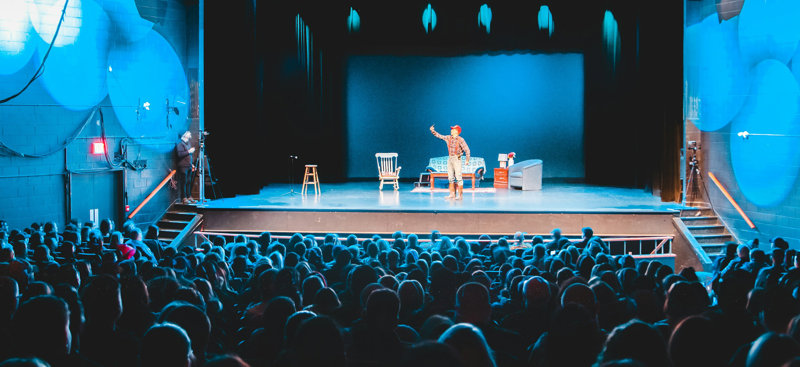
Spektrix integration
Spektrix is the ticketing platform used by a large proportion of UK arts venues, and integrating it well is a specialism rather than a standard web task. The API is capable, but the difference between a booking journey that converts and one that loses people is in the detail.
We are a Spektrix partner and have integrated it for venues including The Sub Rooms, where we worked alongside both the venue team and Spektrix to optimise the booking and checkout process.
If Spektrix integration is specifically what you are looking for, our Spektrix integration page covers the technical side in more detail.
We understand how venues work
Venue teams are small. The person updating the website is usually also running social media, writing the brochure copy and answering the phone in a busy week. A website that requires technical confidence to maintain will quietly stop being maintained.
Programmes change late. Shows move, sell out, get added and occasionally get cancelled, sometimes on the day. The content structure has to cope with that without anyone rebuilding a page.
The website is not the only sales channel, and it is competing with habit. Audiences book through aggregators, through the box office by phone, and through the venue site. Making the venue site the easiest route is a design problem as much as a technical one.
Budgets are genuinely constrained, and often mixed. Public funding, earned income and fundraising all behave differently, and project timelines frequently have to work around a funding decision rather than a commercial one. We are used to that and we plan around it.

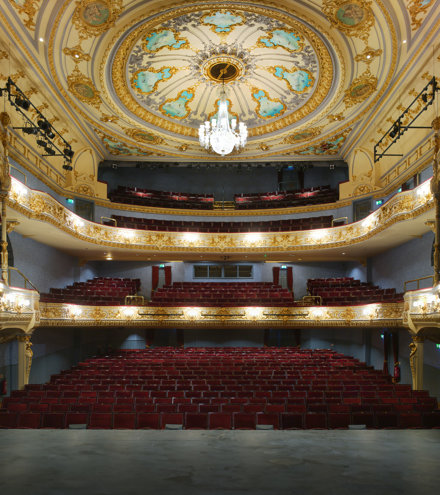
Our work with venues
Everyman Theatre, Cheltenham. The Everyman runs over 800 performances a year across its main auditorium and the Irving Studio, and reaches more than 14,000 people through its youth and community programmes. They first approached us to stop show content having to be entered into multiple ticketing platforms separately. We have since worked as their digital partner on website improvements, driving online sales and GDPR compliance.
The Sub Rooms, Stroud. The Sub Rooms is a community arts venue with a programme spanning music, dance, theatre, visual arts, spoken word and workshops. They came to us needing a website overhaul and improvements to event listings and ticket booking. Through a series of workshops we identified improvements for both audiences and the venue's own team, and worked with Spektrix to optimise the booking and checkout journey.
Why venues choose 16i
We are a Spektrix partner, which means the integration work is familiar rather than exploratory.
We build on Umbraco and .NET, so the content management side is genuinely usable by non-technical teams, and bespoke functionality is built in-house rather than subcontracted.
We are B Corp certified, which matters to a number of the arts organisations we work with, particularly those with their own social and environmental commitments.
We are based in Cheltenham, in the middle of a part of the country with a dense arts scene, and we work with venues nationally.
We stay involved. The Everyman relationship has run for years rather than a single project, which is generally how venue work goes: the website is never really finished because the programme never stops.

How a project starts
A first conversation, usually half an hour, to understand the venue, the programme and what is not working. No charge and no obligation.
If it looks like a fit, a discovery session with the people who will actually use the system: marketing, box office and whoever maintains the site day to day. This is where most of the useful detail emerges.
A written proposal covering scope, timeline and cost, including what is deliberately out of scope. You get a clear picture before committing to anything.
We are equally happy to say when a full rebuild is not what a venue needs. Sometimes the answer is a better booking journey on the site you already have.A first conversation, usually half an hour, to understand the venue, the programme and what is not working. No charge and no obligation.
If it looks like a fit, a discovery session with the people who will actually use the system: marketing, box office and whoever maintains the site day to day. This is where most of the useful detail emerges.
A written proposal covering scope, timeline and cost, including what is deliberately out of scope. You get a clear picture before committing to anything.
We are equally happy to say when a full rebuild is not what a venue needs. Sometimes the answer is a better booking journey on the site you already have.
Frequently asked questions
Do you only work with venues that use Spektrix?
No. Spektrix integration is a specialism of ours and a good proportion of our venue clients use it, but we work with venues on whichever ticketing platform they have chosen, and with venues whose requirements have nothing to do with ticketing at all.
We are a small venue with a small budget. Is that a problem?
Not necessarily, though it does shape what is sensible. Some venue projects are substantial rebuilds and others are focused improvements to a booking journey or a listings structure. It is worth a conversation either way, and we will tell you honestly if what you need is smaller than what you were expecting to commission.
How long does a venue website project take?
A typical venue website runs 10 to 16 weeks from discovery to launch, including ticketing integration. Projects with more complex membership, fundraising or multi-space requirements are scoped individually.
Can you work with our existing website rather than rebuilding it?
Often yes. If the underlying platform is sound, improving the booking journey, the listings structure or the accessibility of an existing site can deliver most of the benefit for a fraction of the cost of a rebuild.
Do you work with venues outside Gloucestershire?
Yes. We are based in Cheltenham and work with venues across the UK. Discovery workshops and design reviews run well remotely, and we travel for the sessions that genuinely benefit from being in the room.
Talk to us about your venue
If you are planning a website project, struggling with a booking journey that is losing people, or simply want an honest view on whether your current site is holding you back, we would be glad to have a conversation.
16i is a B Corp certified digital agency in Cheltenham, and a Spektrix partner. An initial conversation is free and carries no obligation.