2026 | Digital trends and predictions


Based on current trends and developments across the digital landscape, predictions suggest that 2026 will be shaped less by new technologies and more by how mature ones are applied— primarily driven by embedded artificial intelligence (AI), simpler digital experiences, evolving search behaviour, and rising expectations around privacy and trust.
This blog explores the key areas where these shifts will be most visible.
Embedded AI
In 2026 and beyond, AI will no longer be treated as a separate capability and instead integrated into core workflows, support writing, analysis, design, and decision-making.
In practice, this means:
Fewer explicit prompts and more automated suggestions
Continuous AI assistance, rather than on demand
Greater focus on oversight, accuracy, and accountability.
Ultimately, effective AI implementation will be far more important than having access to the latest model.
Simplification
Users are set to become more selective with their attention, which means digital teams will need to prioritise ease of use (e.g. focusing on reducing existing friction) over expanding features.
This shift will show up through:
Cleaner interfaces with fewer choices
Strong defaults that guide behaviour
Greater emphasis on accessibility and clarity
Intuitive products which earn long-term loyalty.
In a crowded digital environment, it’s likely that simplicity - not design - will become the true competitive advantage.
Default privacy
By 2026, users will expect privacy protections without having to opt-in or read complex policies, so organisations will need to rely less on passive tracking and more on data which is knowingly shared (e.g. sign-ups, preferences, and transactions).
Key changes include:
Reduced dependence on third-party data
Clearer explanations of how data is used
Stronger alignment with platform and regulatory expectations
Greater influence of trust on adoption and retention.
Privacy will therefore become a baseline expectation that directly shapes trust and long-term engagement.
Predictable creator economy
The creator economy will continue but in a more structured form - with growth driven by depth of engagement rather than reach.
This evolution includes:
More niche, specialised audiences
Revenue models based on subscriptions and memberships
Longer-term brand partnerships rather than one-off promotions
Clearer expectations and more stable income streams.
As the creator economy matures, stability and sustained value will outweigh rapid growth and short-term visibility.
Fragmented search
Search behaviour will expand across multiple platforms, with users looking for answers not only from search engines, but also via AI assistants, social platforms, and online marketplaces.
As a result:
Content must be optimised for direct answers, not just rankings
Authority and credibility will matter more than volume
Visibility will depend on context as well as keywords
Being discoverable will require presence across channels.
Discoverability will depend on credibility and adaptability across platforms, opposed to dominance within a single channel.
Frictionless digital identity
Managing digital identity will become simpler and more consistent, which means password-less authentication will become more common, and digital wallets will increasingly store credentials and access rights.
Users will expect:
Seamless sign-in across services
Strong security without added complexity
Identity management that feels integrated, not separate
Identity will become part of the overall user experience.
Essentially, digital identity will shift from a security layer to a seamless part of the overall user experience.
Human oversight
Even as automation expands, human intervention will continue to be required - technology will handle execution, but humans will still need to define intent and direction.
High-value skills will include:
Analytical and critical thinking
Ethical decision-making
Creative and strategic judgement
The most effective digital systems will clearly define the boundary between automation and human control.
Clear boundaries between automation and human decision-making will be essential in order to maintain accountability and trust.
Key takeaway
The defining digital shifts of 2026 will be gradual and practical rather than disruptive, with organisations needing to focus on clarity, trust, and disciplined use of technology to design systems that support users, rather than overwhelm them.
Interested in hearing more?
Get in touch with the 16i team.
Share article:

The rise of AI and its impact on Google, SEO, and the wider web
For over two decades, Google has been the primary gateway to the internet, with websites becoming heavily reliant on performance and visibility in search results, and entire industries being formed around Search Engine Optimisation (SEO). The rapid rise of AI (particularly large language models and AI-powered search experiences) is however beginning to reshape that relationship in fundamental ways.
Read more
How AI has enhanced website performance in 2025: the complete guide
Now one of the most powerful tools for improving website performance, Artificial Intelligence (AI) helps businesses to deliver faster, more intuitive, and more engaging experiences through advanced personalisation, search, security, and analytics. In 2025, AI’s impact has expanded dramatically including emerging challenges, with changes in user behaviour, AI-driven search, and new security risks resulting in website owners needing a modern, strategic approach. This guide explains how AI improves website performance, where it delivers the strongest results, and what businesses should anticipate for the future.
Read more
Upgrading to Umbraco 17: a strategic investment for your business
Used and trusted by both developers and marketers, Umbraco offers a high level of customisability, with the latest long-term-supported (LTS) version (Umbraco 17) currently scheduled for release in November 2025. Featuring improved performance and developer tooling, alongside support for the latest .NET versions, Umbraco 17 offers a number of benefits including enhanced security, streamlined workflows, and improved scalability.
Read more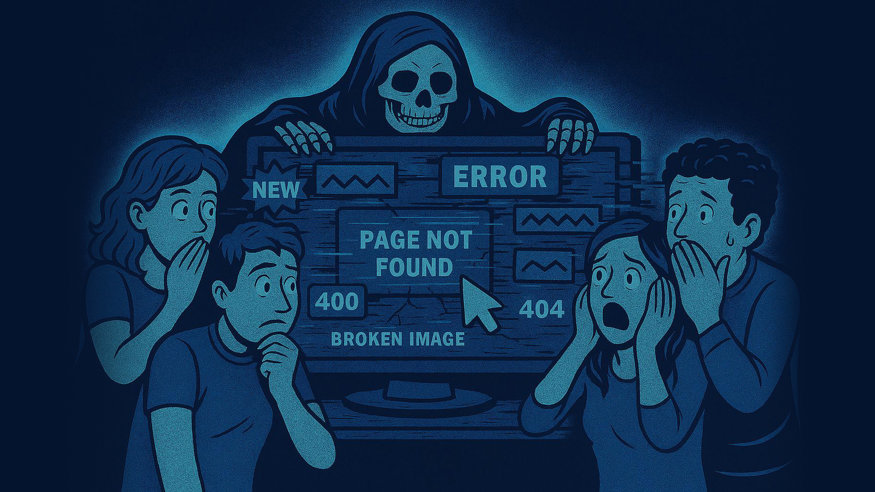
How to avoid website project horror stories!
Maybe you've been there before, maybe this is your first time creating a website. We have seen website projects at all stages turn from dreams into nightmares very easily, often being the ones at the other end helping our soon to be clients put it back on the right path.
Read more
Exploring the benefits of Umbraco 17: a leap forward in CMS flexibility and performance
Umbraco has long held the reputation as a flexible, developer‑friendly content management system (CMS) and with the release of Umbraco 17 scheduled for November 2025, the platform is continuing to evolve. Umbraco 17 will be the next Long‑Term Support (LTS) version, aligned with the upcoming .NET 10 LTS release, and is expected to include enhancements in performance, developer experience, and content workflow modernisation.
Read more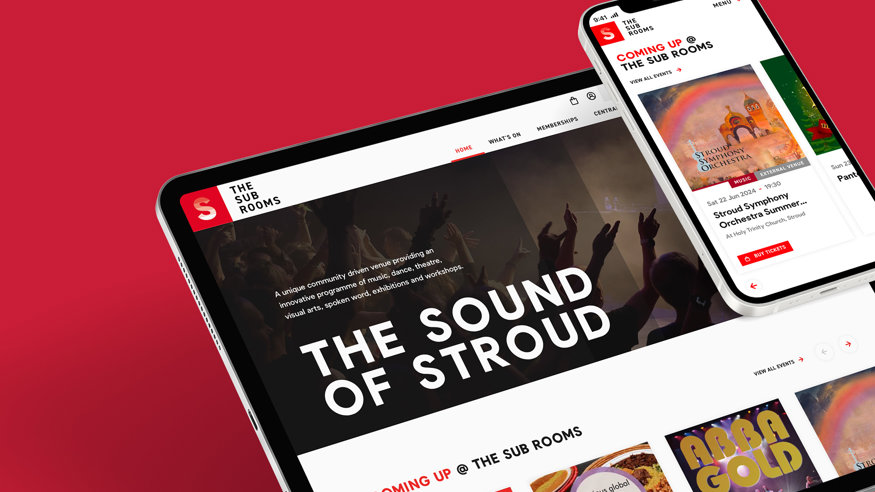
The future is bright for the Sub Rooms
New website and Spektrix integration helped Sub Rooms turn a corner
Read more
Website builders vs bespoke: which is right for your business?
In a digital-first world, a company’s website (and its overall effectiveness) is of paramount importance, serving as both the first impression and initial introduction to a brand. Traditionally built from the ground up by experienced developers, website creation has become increasingly accessible, primarily due to the rise of website builders such as Squarespace, Wix, Weebly, and Webflow, These platforms offer powerful tools, sleek templates, and rapid setup options, without the need for direct developer involvement. However, for businesses with more complex or unique requirements, they can be limiting, with many instead opting for bespoke development tailored to the specific project goals, workflows, and user experience. This blog outlines the pros and cons of each –off-the-shelf website builders vs bespoke development.
Read more
How to spot a text message, iMessage or WhatsApp scam
Top 6 red flags for suspicious text messages
Read more