How AI has enhanced website performance in 2025: the complete guide


Now one of the most powerful tools for improving website performance, Artificial Intelligence (AI) helps businesses to deliver faster, more intuitive and more engaging experiences through advanced personalisation, search, security, and analytics.
In 2025, AI’s impact has expanded dramatically, with changes in user behaviour, AI-driven search and new security risks resulting in website owners needing a modern, strategic approach.
This guide explains how AI improves website performance, where it delivers the strongest results, and what businesses should anticipate for the future.
1. AI chatbots and virtual assistants
AI chatbots have become a core part of website user experience, helping to:
Provide 24/7 customer support
Reduce response times
Qualify leads automatically
Guide users to products or solutions.
With the ability to adapt in real-time based on behaviour and engagement, chatbots are transformative, however models can be manipulated if poorly configured, which means secure, compliant chatbot integrations are becoming increasingly vital.
2. AI-driven performance
AI personalisation remains one of the most valuable tools for improving website performance, enabling:
Product recommendations based on user intent
Dynamic headlines, banners and offers
Tailored content by device, location or behaviour.
Ultimately this helps with three key SEO metrics - helping to increase time on site, engagement, and conversions.
3. AI-powered website search
AI improves on-site search accuracy through:
Natural language understanding
Intent awareness
Behaviour-based ranking
Faster product/content discovery.
Helping to create smoother user journeys and improved overall user satisfaction.
4. AI content creation and SEO optimisation
AI supports content workflows by:
Generating high-quality first drafts
Producing product descriptions and landing pages
Optimising for search intent and clarity
Creating structured, machine-readable content for AI-driven search systems.
It dramatically accelerates production, however manual input to check accuracy and quality is still necessary.
5. AI for web design and development
AI speeds up design and development through:
Automated layout and component generation
Image optimisation
Code generation, debugging and refactoring.
In essence, this helps to improve page speed, Core Web Vitals and overall SEO performance.
6. AI-enhanced website analytics
AI unlocks deeper insights by:
Predicting behaviour and traffic trends
Automating A/B tests
Analysing heatmaps and scroll behaviour
Identifying conversion barriers.
Teams can therefore optimise user experience (UX) faster and with more confidence.
7. AI for website security
AI improves security by detecting:
Fraud and suspicious transactions
Malware and harmful scripts
Unusual login behaviour
Automated attacks or bots.
AI plugins are becoming increasingly common, however security governance is essential to protect data and maintain search engine trust.
8. AI-powered accessibility
AI enhances accessibility with:
Voice navigation
Text-to-speech and speech-to-text
Automatic alt-text generation
Real-time captioning.
Ultimately helping sites to earn better engagement and meet modern compliance standards.
9. AI for Conversion Rate Optimisation (CRO)
AI improves conversions by:
Scoring leads
Enhancing form completion
Highlighting friction points
Optimising user journeys.
Helping businesses turn more traffic into meaningful results.
10. AI Customer feedback analysis
AI enables rapid understanding of customer sentiment by:
Analysing tone in reviews and surveys
Grouping feedback into themes
Extracting user pain points and opportunities
Highlighting trends in social and community chatter.
Providing actionable insights which support continuous improvement.
The changing reality of website performance in 2025
AI brings enormous value, but it also reshapes how users engage online:
AI search reduces website clicks, with AI assistants providing direct answers and often reducing click-through rates
AI traffic behaves differently, with AI-driven referrals often showing:
Higher bounce rates
Shorter time-on-page
Lower browsing depth
AI-readable content is essential, with structured data and schema helping AI systems to understand and surface content
AI plugins require strong security, with poorly secured AI widgets introducing significant vulnerabilities.
What’s likely to happen in 2026: key AI trends that will impact websites
As AI evolves, several major shifts are expected in 2026 that will further influence website performance, SEO and user experience:
1. AI assistants will become a primary gateway to the web
AI-driven assistants are expected to become the first stop for many users looking for products, services or information, which is likely to accelerate the trend of:
Fewer traditional search queries
More conversational, multi-step queries
More in-assistant product and content discovery.
This will however mean that websites will need clearer data structures and stronger brand signals to stay visible.
2. “AI-optimised content” will become an SEO standard
By 2026, content may need to be optimised for:
AI answer engines
AI citations
Multimodal search (image + text + video queries)
Agent-to-agent communication (AI tools querying websites directly).
This shifts SEO from keyword-focused to entity-focused, meaning websites must be consistent, structured, and authoritative.
3. More on-site AI automation will be expected
Websites may increasingly include:
AI-driven homepages
Personalised navigation based on behaviour
Predictive product recommendations
Adaptive page layouts that change based on goals.
Users may therefore come to expect dynamic, AI-curated interfaces.
4. AI compliance and governance will become mandatory
New regulations are already emerging. By 2026, we can expect:
Stricter rules on AI-generated content transparency
Clearer guidelines on AI-assisted decision-making
Mandatory audits for customer-facing AI tools.
Security and responsible AI will be ranking factors, not just best practice.
5. AI-enhanced user journeys will become more unified
AI tools will increasingly coordinate across:
Websites
Mobile apps
Email
CRM
Support channels.
This means websites are likely to become one part of a connected AI-assisted customer journey, not the only touchpoint.
Conclusion: AI is essential for website performance today—and even more in 2026
AI is revolutionising how websites are built, optimised, secured, and discovered. In 2025, its benefits are clear—but the landscape is shifting fast.
By 2026, AI will influence not just website performance, but how users interact with the entire digital ecosystem.
To stay competitive, businesses should consider:
Combining AI automation with expert oversight
Optimising for humans and AI systems
Strengthening security around AI tools
Focusing on structured, authoritative content
Preparing for AI-first search and discovery.
Ultimately, websites that adapt early will lead the next wave of digital performance and visibility.
Interested in hearing more?
Get in touch with the 16i team.
Share article:

The rise of AI and its impact on Google, SEO, and the wider web
For over two decades, Google has been the primary gateway to the internet, with websites becoming heavily reliant on performance and visibility in search results, and entire industries being formed around Search Engine Optimisation (SEO). The rapid rise of AI (particularly large language models and AI-powered search experiences) is however beginning to reshape that relationship in fundamental ways.
Read more
2026 | Digital trends and predictions
Based on current trends and developments across the digital landscape, predictions suggests that 2026 will be shaped less by new technologies and more by how mature ones are applied— primarily driven by embedded AI, simpler digital experiences, evolving search behaviour, and rising expectations around privacy and trust. This blog explores the key areas where these shifts will be most visible.
Read more
Upgrading to Umbraco 17: a strategic investment for your business
Used and trusted by both developers and marketers, Umbraco offers a high level of customisability, with the latest long-term-supported (LTS) version (Umbraco 17) currently scheduled for release in November 2025. Featuring improved performance and developer tooling, alongside support for the latest .NET versions, Umbraco 17 offers a number of benefits including enhanced security, streamlined workflows, and improved scalability.
Read more
How to avoid website project horror stories!
Maybe you've been there before, maybe this is your first time creating a website. We have seen website projects at all stages turn from dreams into nightmares very easily, often being the ones at the other end helping our soon to be clients put it back on the right path.
Read more
Exploring the benefits of Umbraco 17: a leap forward in CMS flexibility and performance
Umbraco has long held the reputation as a flexible, developer‑friendly content management system (CMS) and with the release of Umbraco 17 scheduled for November 2025, the platform is continuing to evolve. Umbraco 17 will be the next Long‑Term Support (LTS) version, aligned with the upcoming .NET 10 LTS release, and is expected to include enhancements in performance, developer experience, and content workflow modernisation.
Read more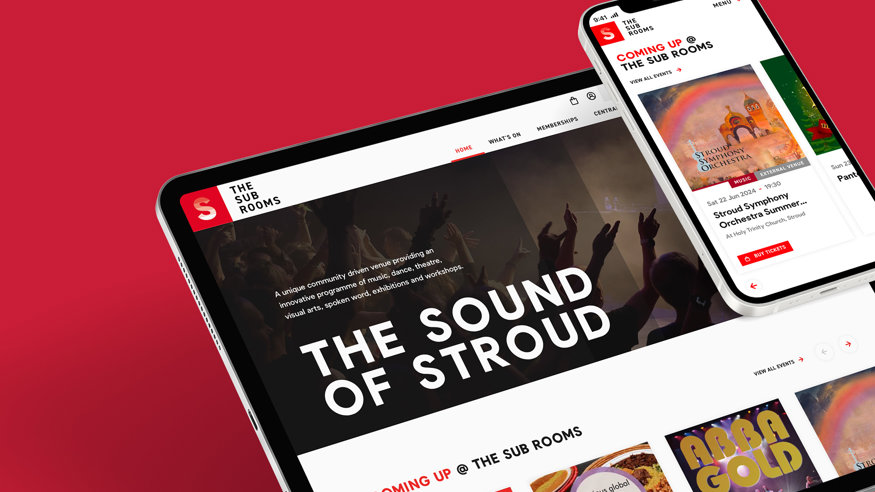
The future is bright for the Sub Rooms
New website and Spektrix integration helped Sub Rooms turn a corner
Read more
Website builders vs bespoke: which is right for your business?
In a digital-first world, a company’s website (and its overall effectiveness) is of paramount importance, serving as both the first impression and initial introduction to a brand. Traditionally built from the ground up by experienced developers, website creation has become increasingly accessible, primarily due to the rise of website builders such as Squarespace, Wix, Weebly, and Webflow, These platforms offer powerful tools, sleek templates, and rapid setup options, without the need for direct developer involvement. However, for businesses with more complex or unique requirements, they can be limiting, with many instead opting for bespoke development tailored to the specific project goals, workflows, and user experience. This blog outlines the pros and cons of each –off-the-shelf website builders vs bespoke development.
Read more
How to spot a text message, iMessage or WhatsApp scam
Top 6 red flags for suspicious text messages
Read more