The rise of AI and its impact on Google, SEO, and the wider web


For over two decades, Google has been the primary gateway to the internet, with websites becoming heavily reliant on performance and visibility in search results, and entire industries being formed around Search Engine Optimisation (SEO).
The rapid rise of Artificial Intelligence (AI) (particularly large language models and AI-powered search experiences) is however starting to fundamentally reshape that relationship.
Today, users no longer just ‘search’ the web - they ask questions and receive synthesised answers, without even needing to click-through to a site; with this shift having significant implications for Google, website traffic, content creators, and ultimately the structure of the web itself.
From ‘search’ to ‘answer’ engine
In essence, traditional search works by pointing users to information, whilst AI-driven search tends to deliver the information directly.
The rise of Google’s AI Overviews, Bing’s AI search, and tools like ChatGPT have however trained users to expect complete, conversational answers rather than a simple list of blue links, with many AI responses now removing the need to visit multiple, if any, websites at all.
This represents a structural change in which:
Search engines are becoming answer engines
Clicks are no longer guaranteed
Visibility does not always equal traffic.
For Google, this is both an opportunity and a risk. AI keeps users inside Google’s ecosystem longer, however it undermines the original, incentive model of publishers needing to create content in exchange for traffic.
The decline of informational traffic
One of the clearest impacts of AI is on informational queries, the foundation of many content-driven websites.
Examples include:
'What is X?'
'How does Y work?'
'Best tools for Z'
'Pros and cons of…'.
AI systems can answer these questions instantly and accurately, with many websites already seeing:
Fewer impressions turning into clicks
Reduced organic traffic for top-funnel content
Higher competition for the remaining clicks.
This suggests a significant change to traditional SEO - ranking first is no longer enough, particularly if the answer is displayed before the user even scrolls.
A shift in which content is valuable
AI excels at summarising existing information; however, it struggles with originality, lived experience, strong opinions, and trust-based authority.
Content most at risk:
Generic explainer articles
Blog posts written specifically ‘for SEO’
Rehashed lists and summaries.
Content that is gaining value:
First-hand expertise and case studies
Opinionated analysis and thought leadership
Original data, research, and insights
Strong brands with loyal audiences.
In essence, AI rewards depth over breadth and authority over volume, which means that websites reliant on publishing hundreds of shallow articles are going to struggle, while those with genuine expertise have an opportunity to stand out.
Google's balancing act
Google faces a difficult challenge, with its success depending on two groups:
Users, who want fast, accurate answers
Publishers, who supply the content which trains and feeds Google’s systems.
If publishers lose too much traffic, fewer will invest in creating high-quality content, ultimately weakening Google’s ecosystem and necessitating a more measured approach to deploying AI-generated answers.
That said, Google is still likely to prioritise user experience over publisher traffic, which means websites can no longer assume Google is a neutral distributor of attention.
The rise of zero-click and AI-driven discovery
AI doesn’t just change how users find content: it changes where they’re finding it.
Increasingly, people are discovering information through:
AI chat interfaces
Voice assistants
Social platforms with built-in search
Direct recommendations rather than queries.
This suggests a more fragmented web. Instead of one dominant discovery channel (Google Search), attention is starting to spread across multiple AI systems and platforms; which means businesses can no longer rely on a single traffic source for their site.
What this means for SEO going forward
SEO is evolving from a technical and keyword-driven discipline into something much broader and more strategic.
Modern SEO increasingly involves:
Building recognisable brands, not just ranking pages
Optimising for entity authority, not just keywords
Creating content that AI references, not replaces
Thinking in terms of visibility, influence, and trust...not just clicks.
In some cases, being cited by an AI system may become as valuable as a traditional search visit, even if the user doesn’t click through immediately.
The future of site traffic
Website traffic is unlikely to disappear; however it will become:
More qualified
More intentional
Harder to earn.
Users who do click through will often be looking for depth, tools, community, or experiences that AI can’t fully provide, raising the importance of:
Strong on-site experiences
Clear value propositions
Products, services, or communities that go beyond content.
Websites that exist solely to attract ad impressions from search traffic will struggle, whilst those that provide ongoing value will adapt.
A more human web?
Ironically, the rise of AI could potentially push the web in a more human direction.
As AI handles basic information retrieval, the remaining space is likely to be filled by:
Personal voices
Unique perspectives
Trust-based relationships
Creativity and experimentation.
Ultimately, the web may become smaller in volume, but richer in meaning.
Final thoughts
The rise of AI is not just a technical shift, it’s an economic and cultural one; with Google, SEO, and the wider web being redefined in real time.
For creators and businesses, the question is no longer 'How do I rank?' but:
‘Why should someone seek me out?’
‘What can I offer that AI cannot replicate?’
'How do I build something worth returning to?’.
Companies need to answer these questions to not only survive the AI era, but to help shape what the next version of the web will look like.
Worried about AI’s impact on your site?
Get in touch with the 16i team.
Share article:

2026 | Digital trends and predictions
Based on current trends and developments across the digital landscape, predictions suggests that 2026 will be shaped less by new technologies and more by how mature ones are applied— primarily driven by embedded AI, simpler digital experiences, evolving search behaviour, and rising expectations around privacy and trust. This blog explores the key areas where these shifts will be most visible.
Read more
How AI has enhanced website performance in 2025: the complete guide
Now one of the most powerful tools for improving website performance, Artificial Intelligence (AI) helps businesses to deliver faster, more intuitive, and more engaging experiences through advanced personalisation, search, security, and analytics. In 2025, AI’s impact has expanded dramatically including emerging challenges, with changes in user behaviour, AI-driven search, and new security risks resulting in website owners needing a modern, strategic approach. This guide explains how AI improves website performance, where it delivers the strongest results, and what businesses should anticipate for the future.
Read more
Upgrading to Umbraco 17: a strategic investment for your business
Used and trusted by both developers and marketers, Umbraco offers a high level of customisability, with the latest long-term-supported (LTS) version (Umbraco 17) currently scheduled for release in November 2025. Featuring improved performance and developer tooling, alongside support for the latest .NET versions, Umbraco 17 offers a number of benefits including enhanced security, streamlined workflows, and improved scalability.
Read more
How to avoid website project horror stories!
Maybe you've been there before, maybe this is your first time creating a website. We have seen website projects at all stages turn from dreams into nightmares very easily, often being the ones at the other end helping our soon to be clients put it back on the right path.
Read more
Exploring the benefits of Umbraco 17: a leap forward in CMS flexibility and performance
Umbraco has long held the reputation as a flexible, developer‑friendly content management system (CMS) and with the release of Umbraco 17 scheduled for November 2025, the platform is continuing to evolve. Umbraco 17 will be the next Long‑Term Support (LTS) version, aligned with the upcoming .NET 10 LTS release, and is expected to include enhancements in performance, developer experience, and content workflow modernisation.
Read more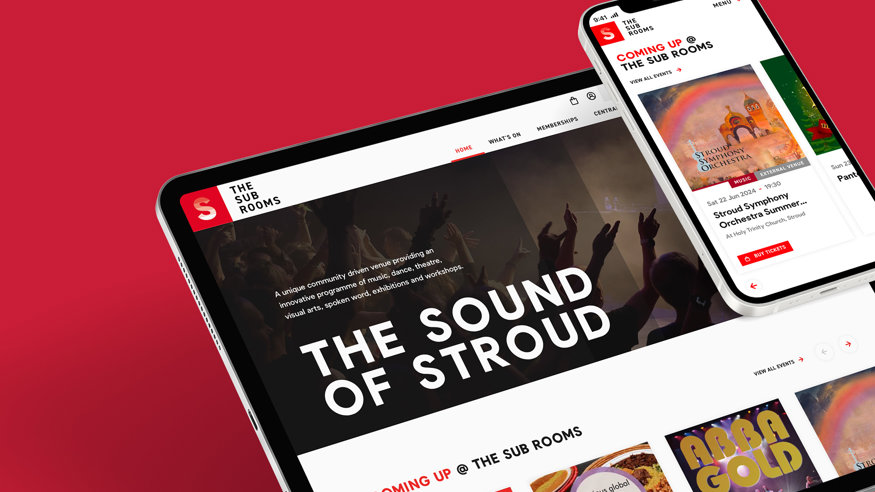
The future is bright for the Sub Rooms
New website and Spektrix integration helped Sub Rooms turn a corner
Read more
Website builders vs bespoke: which is right for your business?
In a digital-first world, a company’s website (and its overall effectiveness) is of paramount importance, serving as both the first impression and initial introduction to a brand. Traditionally built from the ground up by experienced developers, website creation has become increasingly accessible, primarily due to the rise of website builders such as Squarespace, Wix, Weebly, and Webflow, These platforms offer powerful tools, sleek templates, and rapid setup options, without the need for direct developer involvement. However, for businesses with more complex or unique requirements, they can be limiting, with many instead opting for bespoke development tailored to the specific project goals, workflows, and user experience. This blog outlines the pros and cons of each –off-the-shelf website builders vs bespoke development.
Read more
How to spot a text message, iMessage or WhatsApp scam
Top 6 red flags for suspicious text messages
Read more